
The Romantic Essence of “Tisa” by Rain Bordo
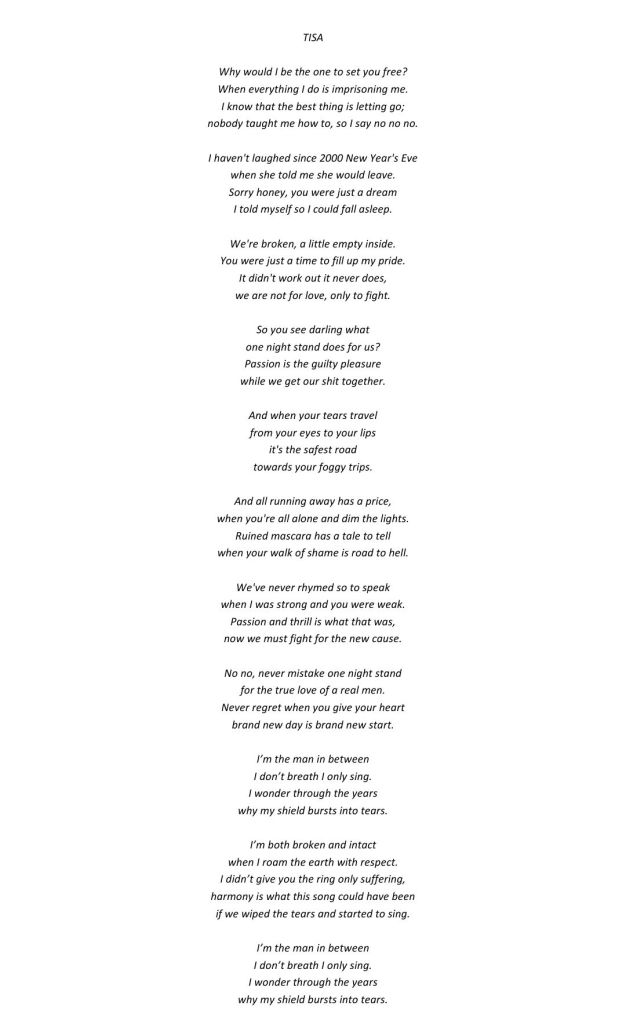
Mateo Balaban, known as Rain Bordo, crafts in his poem “Tisa” a deeply personal and romantic meditation on love, loss, and the search for meaning in the aftermath of heartbreak. The poem is not a conventional love song; rather, it is a confession, a reckoning, and ultimately, a testament to the resilience of the human heart. Through its raw honesty and lyrical vulnerability, “Tisa” becomes a river of emotion, carrying the reader through the turbulent waters of memory, regret, and hope.
A Love That Imprisons and Liberates
From the opening lines, the poem sets up a paradox: “Why would I be the one to set you free? / When everything I do is imprisoning me.” Here, love is both a cage and a key, a force that binds as much as it promises release. The speaker is painfully aware of his own limitations, confessing that letting go is the best thing, yet admitting, “nobody taught me how to, so I say no no no.” This refrain echoes throughout the poem, a stubborn resistance to the vulnerability that love demands.
Yet, within this resistance lies a deep longing. The memory of laughter on New Year’s Eve 2000, the ache of a love that was “just a dream,” and the admission of emptiness all point to a heart that has been both filled and hollowed by love. The poem’s romanticism is not in idealized passion, but in the courage to face the truth of one’s own brokenness.
The Romance of Imperfection
“Tisa” is a poem that finds beauty in imperfection. The speaker acknowledges the failures of love—”It didn’t work out it never does, / we are not for love, only to fight”—but does so without bitterness. Instead, there is a kind of gentle acceptance, a recognition that even fleeting connections have value: “So you see darling what / one night stand does for us? / Passion is the guilty pleasure / while we get our shit together.”
This is a romance for the real world, where mascara runs, walks of shame are roads to hell, and tears are the safest road to healing. The poem does not shy away from the messiness of desire and disappointment. Instead, it embraces these moments as part of the journey, suggesting that every heartbreak is a step toward self-understanding.
A Song of Renewal
Despite its melancholic tone, “Tisa” is ultimately a poem of renewal. The speaker urges, “Never regret when you give your heart / brand new day is brand new start.” There is a quiet optimism here, a belief that even after loss, life offers new beginnings. The refrain, “I’m the man in between / I don’t breath I only sing,” suggests a transformation: the speaker is no longer merely surviving, but expressing, creating, and finding meaning through art.
This theme of renewal is echoed in the poem’s structure, which moves from confession to reflection to a kind of resolution. The speaker recognizes his own duality—”I’m both broken and intact”—and finds a strange harmony in this contradiction. The poem ends not with closure, but with the possibility of healing: “harmony is what this song could have been / if we wiped the tears and started to sing.”
Romantic Imagery and Emotional Honesty
What makes “Tisa” so romantic is not just its subject matter, but its emotional honesty. The poem is unafraid to dwell in the shadows, to admit to pride, emptiness, and the pain of letting go. Yet, it also celebrates the moments of connection, the thrill of passion, and the hope that comes with each new day.
The imagery is intimate and evocative: tears traveling from eyes to lips, ruined mascara telling a tale, a shield that bursts into tears. These details ground the poem in lived experience, making its emotions feel immediate and real.
Conclusion: The River as Metaphor
In the end, “Tisa” is a river—sometimes calm, sometimes raging, always moving forward. It carries with it the debris of past loves, the silt of regret, but also the promise of renewal. Rain Bordo’s poem is a romantic journey not because it offers easy answers, but because it dares to ask the hardest questions: How do we let go? How do we heal? How do we find harmony in the discord of our hearts?
By embracing both the pain and the beauty of love, “Tisa” becomes a song for anyone who has ever loved and lost, and who still believes in the possibility of beginning again.
 Rain Bordo