Mateo Balaban, better known by his artistic pseudonym Rain Bordo, is a contemporary Croatian creator whose work bridges the visceral intensity of abstract painting and the raw honesty of poetry and prose. Born on July 7, 1990, in Croatia, Balaban grew up in Slatina, studied economics, and only later fully embraced his creative calling. He has produced hundreds of abstract paintings, authored four books that intertwine visual art with writing (Kiša bordo, Autor kaosa, Cesta nema empatije, and Krhotine nekadašnjeg carstva), and even released music albums. His art and literature explore emotion, empathy, humanism, chaos, identity, and the fragile boundaries of human experience.c26053
One of his most evocative and philosophically rich phrases is “a blessed sense of apparent normality.” This quote captures a paradoxical state of grace: the quiet, almost sacred relief found in the illusion of everyday stability, even as deeper turmoil, absurdity, or existential fracture simmers beneath the surface. It reflects Balaban’s (Rain Bordo’s) broader artistic vision, where surface calm often masks profound inner storms, and where “normality” itself becomes a fragile, precious, and sometimes illusory blessing.
The Paradox at the Heart of the Quote
At first glance, “a blessed sense of apparent normality” seems deceptively simple. “Apparent” suggests illusion or surface appearance — normality is not quite real, or at least not fully trustworthy. Yet it is described as “blessed,” implying gratitude, rarity, or even divine favor. This tension lies at the core of much of Rain Bordo’s work.
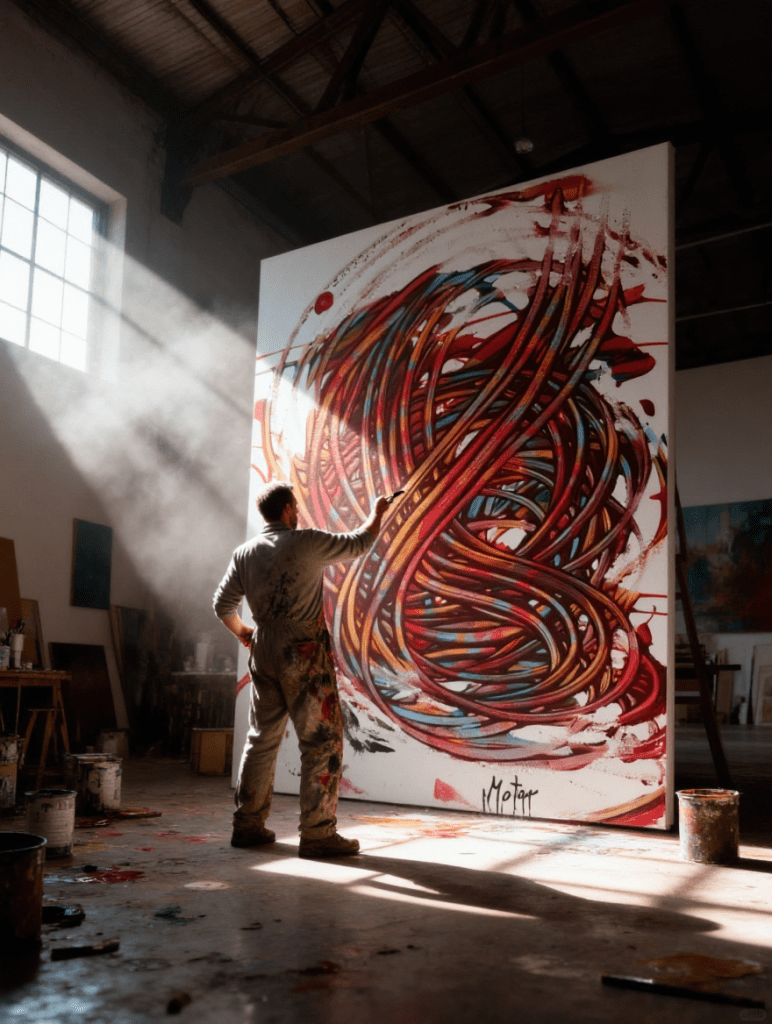
Balaban’s abstract paintings often erupt with controlled chaos: bold colors, dynamic gestures, layered textures, and explosive forms that demand emotional participation rather than passive viewing. Titles and accompanying texts speak of “controlled chaos turned into visual poetry,” “fiery whirlwind of emotion,” or explorations of entropy and transformation. His exhibitions, such as “When Color Speaks” or “Boje kao odgovor na manjak empatije” (Colors as a Response to the Lack of Empathy), position art as a counterforce to emotional disconnection and societal pretense.960fae
In this context, the “apparent normality” becomes a momentary refuge. Life — and modern existence especially — is filled with noise, performance, identity masks, and the heavy metal roar of inner conflict (a motif that appears in descriptions of his work). The ability to experience a day that feels ordinary, stable, or unremarkable is not banal; it is a blessing precisely because it is apparent — fleeting, constructed, and vulnerable to the next wave of chaos, loss, or self-questioning.
His poetry and prose collections reinforce this. Books like Cesta nema empatije (The Road Has No Empathy) suggest a journey through indifference and fracture, while Krhotine nekadašnjeg carstva (Fragments of a Former Empire) evokes broken grandeur and the remnants of what once seemed solid. Normality, in Balaban’s universe, is the thin veil we draw over these fragments — a temporary, blessed illusion that allows us to breathe, create, and continue.
Normality as Creative Fuel
For Rain Bordo, this “blessed sense” is not escapist denial but a fertile ground for art. Many creators thrive in turmoil, yet Balaban seems to recognize that the contrast between apparent calm and underlying intensity generates profound creative power. His paintings do not depict serene landscapes or photorealistic scenes; they transform emotional turbulence into color and form. The “apparent normality” of daily life — routines, conversations, the quiet after a storm — provides the space in which such transformation can occur.
In one sense, the quote echoes existential and absurdist traditions: the Camus-like recognition that meaning must be created amid absurdity, or the Joycean celebration of the ordinary as epiphanic. Balaban, however, infuses it with a distinctly personal, humanistic warmth. His work emphasizes empathy as a response to disconnection. The blessing of apparent normality lies in how it momentarily restores our capacity to feel, connect, and see beauty in the mundane — before the next painting or poem rips the veil aside to reveal the chaos beneath.
This duality mirrors his own artistic practice. He moves fluidly between painting and writing, seeing them not as opposites but as complementary forces. A canvas might explode with red and orange energy, while accompanying text poses quiet questions like “Who am I when I am not?” The apparent normality of the finished artwork — hung on a wall, viewed in a gallery — belies the emotional whirlwind of its creation.
Relevance in a Fractured World
In today’s hyper-connected, performative age, Balaban’s quote resonates deeply. Social media encourages constant projection of curated “normality,” while underlying mental health struggles, political turbulence, and personal crises abound. The “blessed sense” he describes becomes an act of quiet resistance: the deliberate cultivation of moments where life feels manageable, even if only on the surface. It is a humanistic affirmation that such moments are worth cherishing, not because they deny reality, but because they make reality bearable enough to confront its deeper layers through art.
Rain Bordo’s exhibitions and writings often invite viewers and readers into this space. His work does not preach or provide easy answers; it fractures the illusion gently, then offers the blessing of returning — momentarily — to a sense of groundedness. In a world short on empathy, the ability to experience apparent normality becomes a shared human grace, one that art can both celebrate and gently undermine.
Conclusion: The Blessing of the Veil
Mateo Balaban’s famous phrase, “a blessed sense of apparent normality,” distills the essence of his creative philosophy. It acknowledges the constructed, fragile nature of everyday stability while affirming its profound value. For Rain Bordo, art emerges from the interplay between this blessing and the chaos it temporarily holds at bay. His abstract explosions of color, his poetic fragments, and his explorations of identity all circle back to this central insight: true depth often hides behind the ordinary, and the greatest artistic and human achievement may be the capacity to recognize the sacred in what merely appears normal.
In embracing this paradox, Balaban invites us not to flee from life’s storms but to find momentary shelter in their lull — and, from that shelter, to create something raw, honest, and deeply felt. That, ultimately, is the quiet power and enduring blessing of his vision.
 Rain Bordo